

The History of McLaren
Every McLaren that rolls into our showroom at McLaren Washington carries more than 60 years of racing know-how. McLaren started as a small racing team, grew into a Formula 1 powerhouse and then became one of the most respected supercar builders in the world. Whether you're shopping for your first McLaren or you've followed the brand for decades, here's a look at how McLaren got where it is today.
How Bruce McLaren Started It All
In 1963, a young racing driver from New Zealand named Bruce McLaren founded Bruce McLaren Motor Racing in England. Bruce was already a winning Formula 1 driver, but he wanted to build and race his own cars. In 1964, the team built its first car, the McLaren M1A, a lightweight sports racing car. Its success quickly led to customer versions and a growing reputation for smart, efficient engineering.
Can-Am Dominance and the Move to Formula 1
McLaren entered Formula 1 at the 1966 Monaco Grand Prix with the M2B. Two years later, Bruce gave the team its first Grand Prix win at the 1968 Belgian Grand Prix. Meanwhile, McLaren became the team to beat in the North American Can-Am series.
Bruce and fellow New Zealander Denny Hulme won so often that fans called it "The Bruce and Denny Show," and McLaren won five straight Can-Am championships from 1967 to 1971.
Tragedy struck in 1970, when Bruce McLaren died while testing at Goodwood Circuit in England. He was only 32. By then, he had built a team with the people and the drive to keep his vision going.
Championship Years Under Teddy Mayer
Teddy Mayer led McLaren after Bruce's death, and the team kept pushing forward. In 1974, McLaren won its first Formula 1 Constructors' Championship, and Emerson Fittipaldi took the Drivers' Championship in the McLaren M23. James Hunt added another Drivers' title in 1976 after one of the most dramatic seasons in the sport's history.
Ron Dennis, Carbon Fiber and a Golden Era
In 1980, McLaren merged with Ron Dennis's Project 4 racing team. Designer John Barnard then created the McLaren MP4/1, the first Formula 1 car with a carbon fiber composite chassis. It made the car lighter, stiffer and much safer, and carbon fiber construction soon became the standard across the sport. Today, it's still at the heart of every McLaren road car.
What followed was one of the most successful runs in motorsport. Between 1984 and 1991, McLaren drivers won seven Drivers' Championships, with legends like Niki Lauda, Alain Prost and Ayrton Senna. In 1988, McLaren won 15 of 16 races.
After a lean stretch in the mid-1990s, McLaren returned to the top with Mercedes-Benz power, which began in 1995. Mika Häkkinen won back-to-back titles in 1998 and 1999, followed by Lewis Hamilton in 2008.
The McLaren F1 Redefines the Supercar
In 1992, McLaren revealed its first production road car, the McLaren F1. Designed by Gordon Murray, the F1 had a central driving seat, a carbon fiber body and a naturally aspirated BMW V12 engine. In 1998, it set a record as the fastest production car in the world, and only 106 were built. It's still one of the most sought-after collector cars ever made.
McLaren Automotive and the Modern Road Car Era
McLaren Automotive launched in 2010 as a dedicated road car company. Its first model, the McLaren MP4-12C, arrived in 2011 with a twin-turbocharged V8, a carbon fiber chassis and performance taken straight from the racetrack. The 12C set the template for the models that followed, including the 650S, 675LT, 720S and today's 750S.
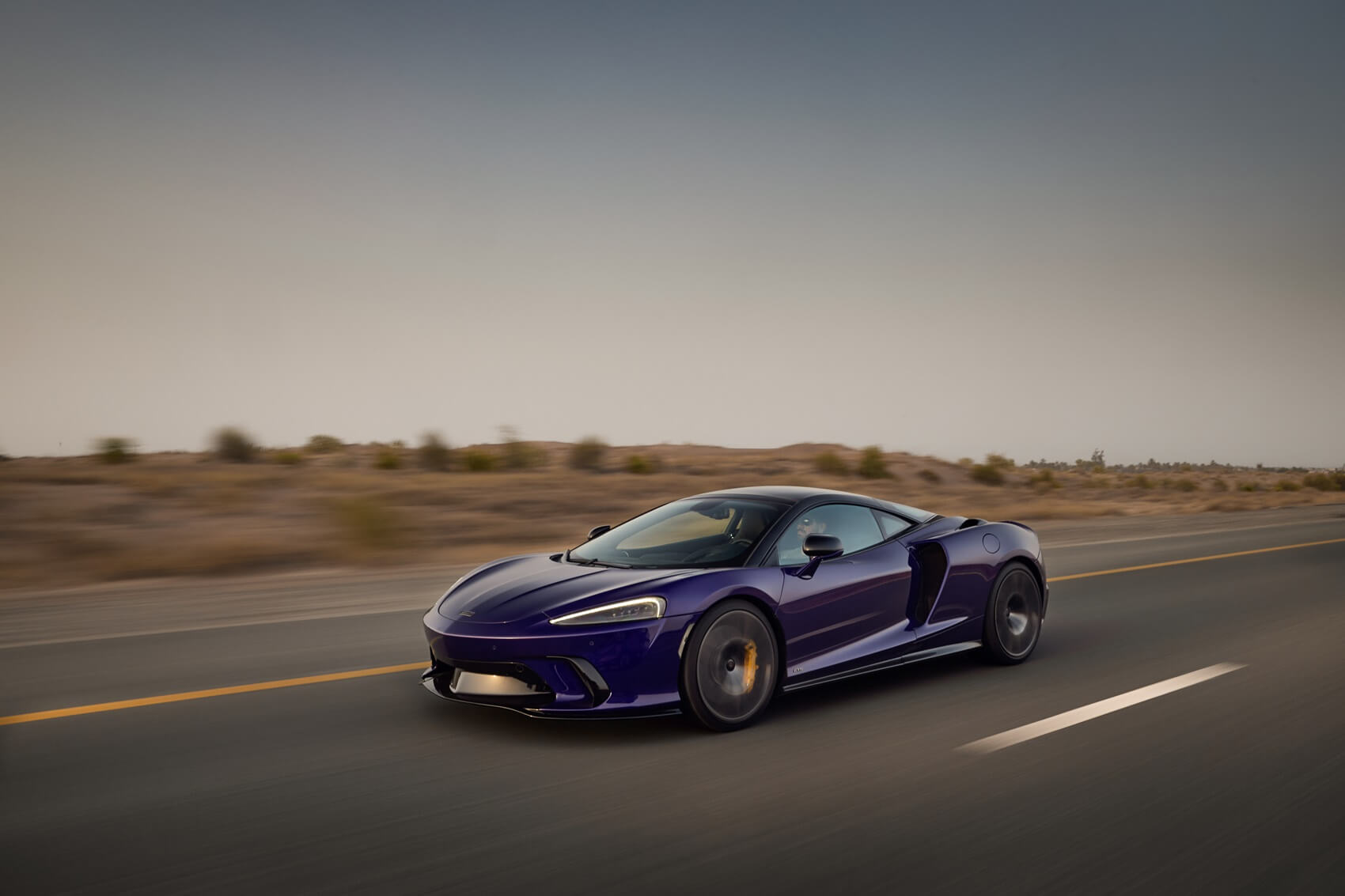
McLaren also built cars for drivers who wanted supercar performance with more everyday comfort. Models like the 570S and 570GT led to the McLaren GT and today's GTS. In 2021, the McLaren Artura brought a high-performance hybrid powertrain to the brand's core lineup, showing that electrification could make a car more exciting, not less.
Ultimate Series Hypercars
McLaren's Ultimate Series is where the brand pushes the limits. The 2013 McLaren P1 used hybrid technology to boost performance, producing 903 horsepower. The track-focused McLaren Senna, the open-cockpit Elva and the 250-MPH Speedtail followed. Most recently, the McLaren W1 became the brand's most powerful road car yet, with 1,258 horsepower.
McLaren Racing Today
McLaren's racing story is still being written. After a tough stretch in the 2010s, the team returned to the top, winning the Formula 1 Constructors' Championship in 2024 for the first time since 1998. McLaren won the Constructors' title again in 2025, and Lando Norris won the 2025 Drivers' Championship. The road cars and the race team still share a home in Woking, England, so lessons from the track keep shaping the cars you drive.
FAQs
What country are McLaren cars made in?
McLaren cars are made in England. Every road car is hand-assembled at the McLaren Production Centre in Woking, Surrey, next to the McLaren Technology Centre, where the Formula 1 team is based.
When was McLaren founded?
Bruce McLaren founded McLaren in 1963 as Bruce McLaren Motor Racing. The road car division, McLaren Automotive, launched in 2010.
What was the first McLaren vehicle?
The first McLaren was the M1A sports racing car, built in 1964. The first McLaren production road car was the McLaren F1, revealed in 1992.
When did McLaren join F1?
McLaren made its Formula 1 debut at the 1966 Monaco Grand Prix. The team earned its first Grand Prix win in 1968 at the Belgian Grand Prix.
Experience McLaren History at McLaren Washington
At McLaren Washington, we're proud to share this legacy with drivers in Sterling, VA, Washington, D.C., Alexandria, VA and Baltimore, MD. Browse our new and pre-owned McLaren inventory, schedule a test drive or talk with our team about which model fits how you drive.